


In Times of AI, Practice Slow Design
We have never produced as fast as we do right now. AI grants us unprecedented velocity, but it doesn't tell us what to do with the time we save. Because the challenge isn't velocity itself, it's that when everything accelerates, the first thing to disappear is the pause where meaningful decisions are born.

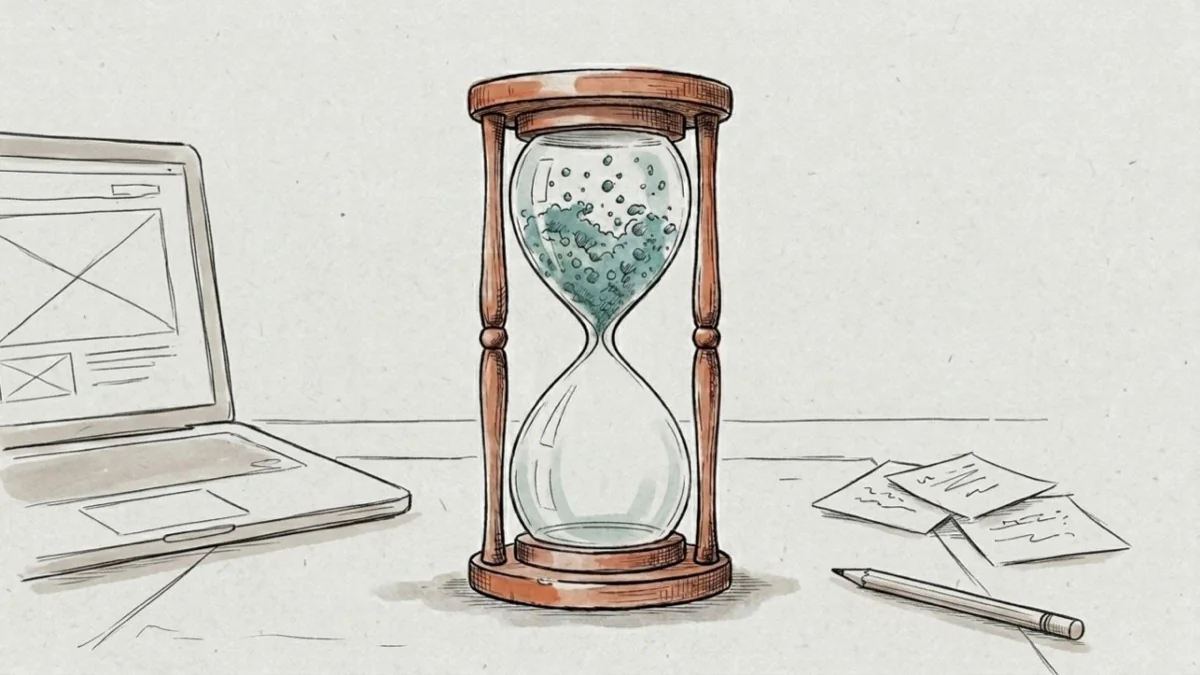
The Hidden Cost of Immediacy
Instant generation is quietly conditioning us to treat every design decision as entirely disposable.
If an interface doesn't feel right, you click generate again. If an idea isn't immediately compelling, you prompt a different variation.
The marginal cost of producing visual output is so low that we gradually devalue what is produced. And in doing so, we lose something we once took for granted: the cognitive resistance that compelled us to sit with an idea until we had genuinely thought it through.
The unrelenting pressure to deliver fast wasn't invented by AI, it has always plagued software development. But generative tools stripped away the natural friction that used to force us to pause and reflect.
Slow Where It Matters
Slow Design is not a bureaucratic framework or a rigid methodology with numbered steps.
It emerged in the early 2000s as a thoughtful reaction to hyper-accelerated industrial manufacturing. But in the current landscape of AI-augmented digital products, it takes on an urgent new resonance. Never before have we possessed such staggering capacity to generate artifacts, paired with so little obligation to question whether what we built deserves to exist at all.
Practicing Slow Design means using AI as a vehicle for exploration, not as the final destination.
- It means fiercely protecting time for the questions no prompt can answer: Why does this exist? What should the user genuinely feel? What are we deliberately choosing NOT to build?
- It means strategically picking our craft battles. Not every utility screen requires bespoke artisanal treatment, but the pivotal moments of user experience demand an intentional human care that cannot be rushed.
"The question that matters is not whether AI will do our work. It is what we will do with the space AI cannot occupy."
We can choose to fill that newly opened space by simply producing more... or we can choose to fill it by thinking better.
Both paths are technically valid, but they lead to radically different destinations. And deep down, we all know which path is easier, and which one actually turns us into better designers.